Benbrook homes built from the 1970s through the 1990s often have original flex or sheet-metal ducts that trap fine Texas dust and pollen pulled in through constant summer air conditioning. These systems run harder here than in cooler regions, and the combination of high humidity near the lake and occasional winter heating cycles creates sticky residue along the trunk lines and branches. Homeowners in neighborhoods like Timbercreek and around Benbrook Lake frequently notice musty odors or uneven airflow that trace back to restricted returns rather than the equipment itself.
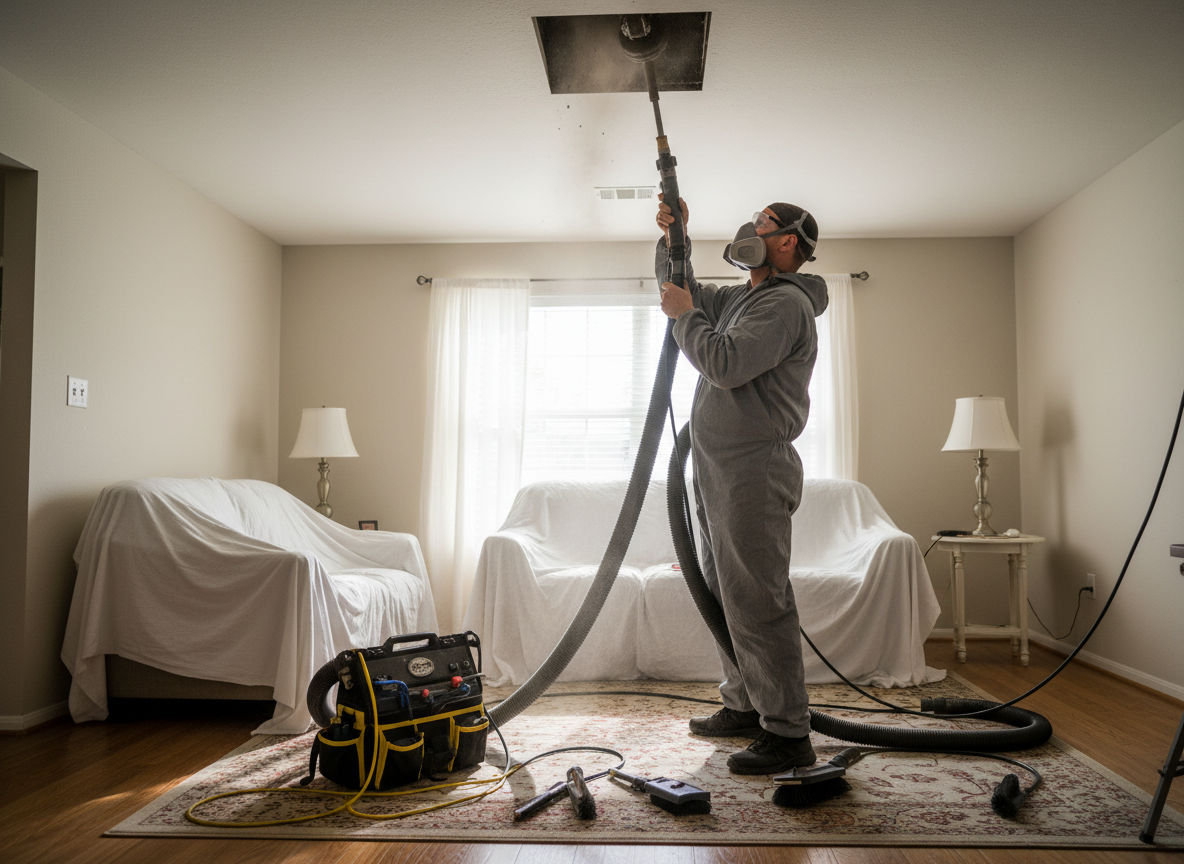
A proper residential cleaning starts with access point mapping because many Benbrook attics have limited entry and mixed insulation depths that can be disturbed. Technicians use negative-pressure equipment with brushes sized for both round and rectangular ducts to avoid tearing the thin flex runs common in 1980s construction. After agitation, HEPA vacuuming pulls debris out before any sanitizing step, and registers are removed and cleaned separately so settled material does not re-enter the living space.
Edge cases include homes with pet dander accumulation in the plenum or older systems that have had multiple filter changes without line cleaning, leaving compacted lint at the main trunk. In Tarrant County, where summer temperatures push systems for months, skipping the return-side cleaning often leaves the job half done. Cedar Sync works from the 8516 Benbrook Blvd base and schedules around the homeowner’s availability, including evenings and weekends.
Technician insight
In Benbrook, the thing that catches most people out with Residential Air Duct Cleaning is how the lake humidity combines with long AC runtimes to pack fine silt into the return plenum of 1980s homes; if you only clean the supply lines you leave the real restriction untouched and the system still struggles.
Timbercreek Return Blockage
A homeowner in the Timbercreek neighborhood reported weak airflow from every vent even after replacing the filter. Inspection showed the main return trunk had collected years of dust and pet hair where the duct made a 90-degree turn near the attic access. Negative-pressure brushing and vacuuming cleared the compacted material, restoring full static pressure and eliminating the musty smell that appeared each time the system started.
How it works
- 1
Initial Walkthrough
Technician inspects every accessible register, return, and the main trunk in the attic or crawlspace to note duct material, access points, and visible debris levels.
- 2
Negative Pressure Setup
Equipment creates suction at the furnace or air handler while brushes agitate the lines section by section, moving material toward the vacuum.
- 3
Register and Grille Cleaning
All removable vents are taken outside, washed, and dried before reinstallation so no loose dust re-enters the system.
- 4
Final Airflow Check
System is run and static pressure readings are compared before and after to confirm improved flow without any added chemicals unless requested.
Pricing
Cost depends on number of runs, access difficulty in attics, and whether flex or rigid ducts are present. Upfront quote given after the walkthrough.