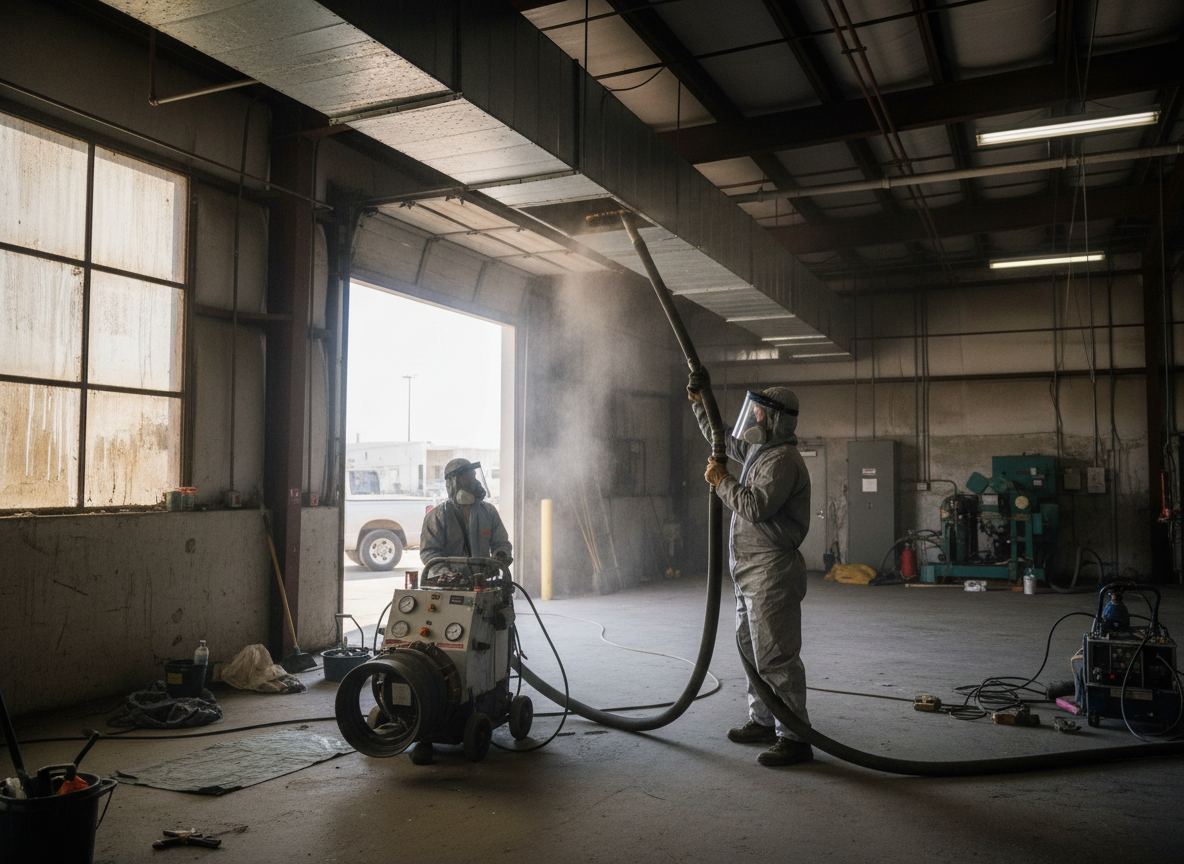
Commercial buildings in Benbrook often feature older rooftop units and long runs of sheet-metal ductwork installed when the area grew in the 1970s and 1980s. Grease from nearby restaurants, fine limestone dust from construction, and pollen blown in from open land around Benbrook Lake combine to form sticky deposits that standard filters miss. These deposits reduce airflow, raise energy costs, and can trigger complaints from employees or customers in shared spaces. Cleaning requires negative-air machines sized for larger volumes and access panels cut at strategic points without disturbing drop ceilings or fire dampers.
Tarrant County commercial codes require that any work on fire-rated shafts or smoke-control systems be documented and left in working order. Crews must identify and protect variable-air-volume boxes, reheat coils, and economizers that are common in Benbrook strip centers and medical offices. Skipping these steps can lead to uneven temperatures or tripped safety sensors after the job. Post-clean verification with a camera and airflow readings confirms the system moves the designed cubic feet per minute before the crew leaves the site.
Seasonal humidity spikes in late spring and early fall increase mold risk inside insulated ductwork, especially in buildings set back from Benbrook Boulevard where shade keeps surfaces cooler. Technicians use EPA-registered sanitizers only where visible growth appears and always ventilate the space afterward. This targeted approach prevents unnecessary chemical use while addressing the actual conditions found in local commercial stock.
Technician insight
In Benbrook, the thing that catches most people out with Commercial Air Duct Cleaning is how quickly grease from nearby restaurants mixes with limestone dust on long horizontal runs near the lake; the humidity keeps the mix sticky and it re-accumulates faster than in drier parts of Tarrant County.
Office Park Ducts in Benbrook
A two-story office building near Benbrook Boulevard had uneven cooling and musty odors in several suites. Inspection showed thick dust and insulation fibers packed inside the main return trunk serving the second floor. Crews cut access panels, used negative air and rotary brushes to clear the line, then resealed and verified airflow. Tenants reported steady temperatures and no more odor complaints the following week.
How it works
- 1
Site Assessment
Walk the building with the facilities contact to map every air handler, return grille, and access point while noting tenant schedules and fire-system locations.
- 2
Containment Setup
Place negative-air machines and sealed barriers to keep debris from entering occupied areas during the cleaning of main trunks and branch lines.
- 3
Mechanical Cleaning
Use rotary brushes, compressed-air whips, and HEPA vacuums sized for commercial duct diameters to remove grease and dust without damaging insulation or dampers.
- 4
Verification and Handover
Run a camera inspection, measure airflow at key points, and provide a written report before restoring normal HVAC operation.
Pricing
Commercial jobs are quoted after an on-site inspection because duct length, number of air handlers, and access difficulty vary widely between Benbrook buildings.