Benbrook sits in Tarrant County with many homes built between the 1960s and 1980s that still run original flexible duct runs routed through hot attics. Summer temperatures routinely push past 95 degrees, so central systems stay on for months and pull fine West Texas dust plus live oak pollen straight into the return plenums. Over time that mix cakes on the inner walls and reduces airflow while feeding mold spores back into living spaces whenever the blower kicks on.
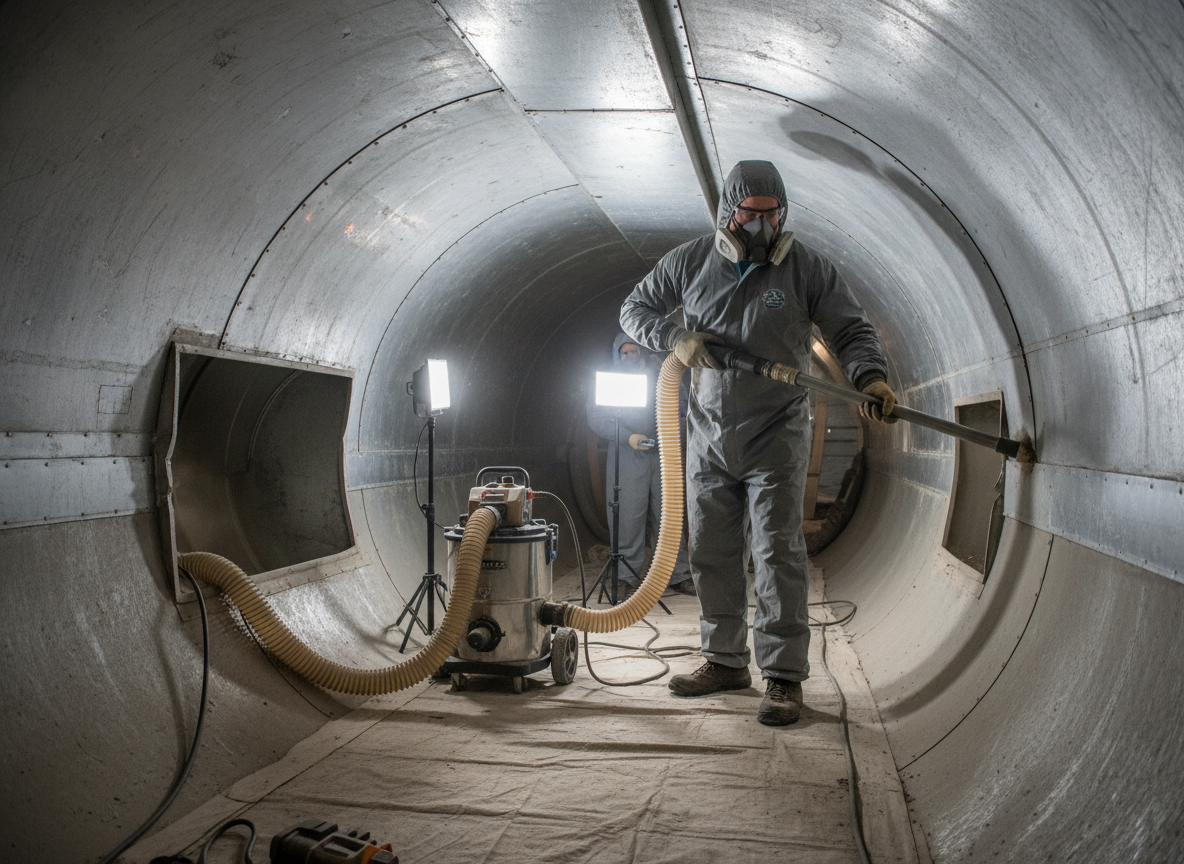
Technicians start by mapping every run from the air handler at 8516 Benbrook Blvd outward, then use negative-air machines sized for the actual duct diameter instead of one-size-fits-all shop vacs. In older Benbrook neighborhoods the seams are often taped with original cloth duct tape that has dried and cracked, so crews carry mastic and foil tape to reseal on the spot rather than leave leaks that will pull attic dust back in within weeks.
After agitation with forward and reverse brushes sized to each branch, the team pulls the loosened debris into a sealed collection unit before any registers are reinstalled. Homeowners in the area notice the difference most during the first cool snap in October when the system no longer recirculates the summer’s accumulated load.
Seasonal Timing
Spring pollen and fall leaf dust both spike in Benbrook, so scheduling before the heaviest AC or heat cycles prevents the worst buildup. Homes near the lake see slightly higher humidity that can turn light dust into sticky residue inside the return elbows.
Technician insight
In Benbrook the thing that catches most people out with professional air duct cleaning is the original cloth tape on 1970s flex runs that has turned to dust; once you start brushing, those seams open and pull attic insulation straight into the system unless you stop and mastic them on the spot.
1968 Ranch Near Benbrook Lake
Homeowner noticed weak airflow and musty smell after a wet spring. Inspection found compacted pollen and dust in the return trunk plus two failed tape seams pulling attic fibers. Crew agitated the runs, sealed the seams with mastic, and restored full airflow without replacing any duct.
How it works
- 1
Initial Walk-Through
Map every supply and return run from the air handler, note any crushed flex or disconnected boots common in Benbrook crawl spaces and attics.
- 2
Negative-Air Setup
Place the collection unit at the air handler and seal all registers so loosened debris moves only toward the vacuum.
- 3
Mechanical Agitation
Run forward and reverse brushes sized to each duct diameter, breaking the compacted dust and pollen layer without damaging the liner.
- 4
Final Inspection and Seal
Re-tape or mastic any failed seams found during cleaning, reinstall registers, and run the system to verify airflow.
Pricing
Cost depends on number of runs, access difficulty in attics, and whether old tape repairs are required; 24/7 scheduling available from the Benbrook Blvd location.