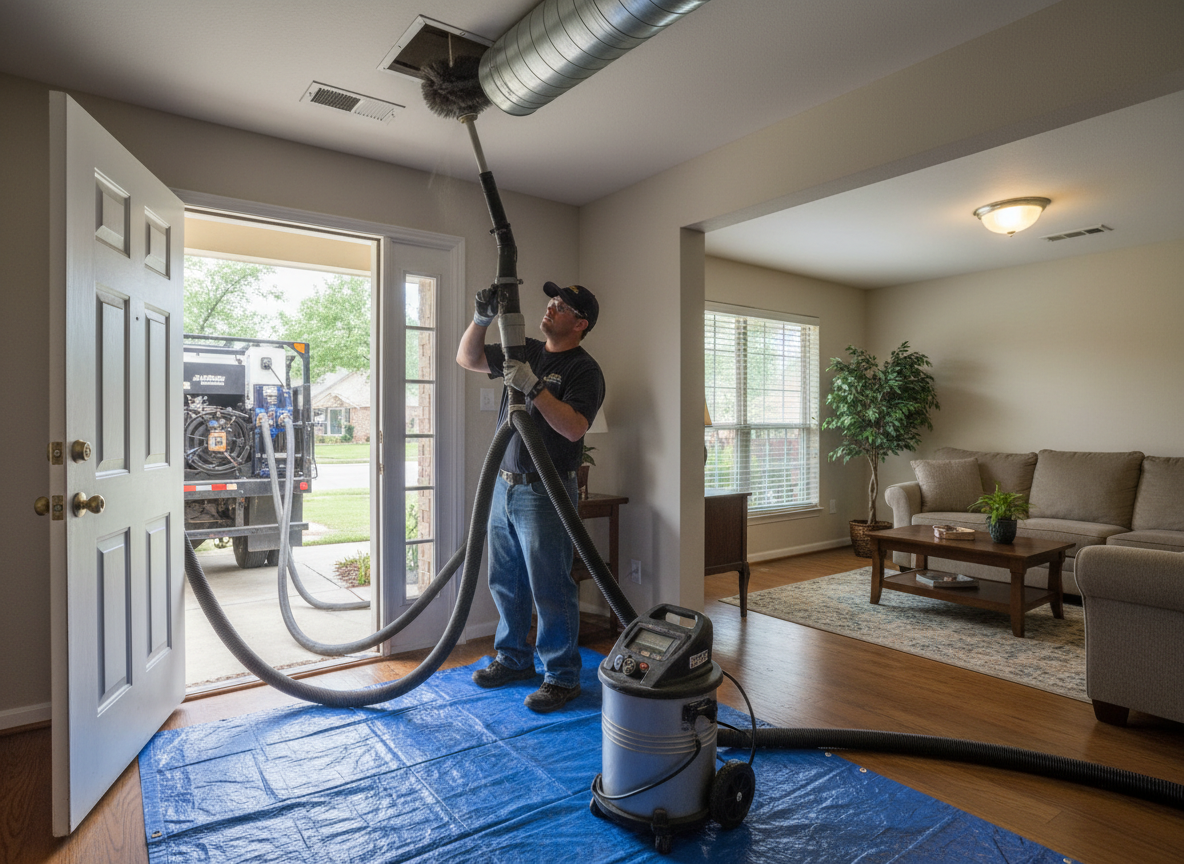
Benbrook homes built from the 1960s through the 1980s often have rigid metal duct runs that run through hot attics. Constant summer AC operation pulls in fine West Texas dust and pollen from nearby open land along the Clear Fork of the Trinity River. Over years this buildup restricts airflow and forces systems to run longer cycles. Cleaning removes the accumulated layer without damaging the original duct seams common in this housing stock.
Tarrant County properties near Benbrook Lake experience higher humidity spikes during spring storms. Moisture mixes with dust inside return plenums and creates conditions for mold on the interior surfaces. Technicians inspect for these soft spots before any brushing begins because disturbed material can spread through the home if not contained. Access panels are cut only where needed and sealed afterward to preserve the original duct integrity.
Surrounding neighborhoods like Western Hills and Ridglea Hills share similar tree cover that drops cottonwood and oak debris near intake vents. This seasonal load combines with the fine soil tracked in from local construction sites. A full cleaning addresses both the main trunk lines and the individual branch runs that feed bedrooms, preventing uneven pressure that leaves some rooms stuffy while others feel over-ventilated.
Seasonal Considerations
Heavy AC runtime from May through September moves the largest volume of air through Benbrook duct systems. Scheduling service in early spring clears winter buildup before the next cooling season begins. Fall cleanings focus on removing any remaining pollen before heating mode activates the furnace blower.
Technician insight
In Benbrook the thing that catches most people out with local air duct cleaning is the number of 1970s homes where the original flex connectors have sagged and trapped debris right at the boot. Homeowners assume a standard trunk clean will fix airflow but those low spots stay packed until you reach them separately.
Western Hills Home with Restricted Returns
A single-story house near Western Hills had weak airflow in two bedrooms. Inspection showed the return runs had collected fine soil tracked in from nearby construction. Brushing cleared the lines while containment kept material out of the living area. Airflow returned to normal across all registers.
How it works
- 1
Initial Inspection
Technician examines accessible ducts, registers, and the furnace or air handler at the Benbrook address to identify access points and any visible restrictions.
- 2
Containment Setup
Negative air machines and sealed connections are placed to keep loosened debris from entering living spaces during the cleaning process.
- 3
Mechanical Cleaning
Rotary brushes and compressed air tools travel the main trunk and branch lines to dislodge dust and debris from metal duct surfaces common in local homes.
- 4
Register and Plenum Service
All supply and return registers are removed, cleaned, and reinstalled while the return plenum receives targeted attention for accumulated material.
- 5
Final System Check
Airflow is tested at multiple points and the system is returned to normal operation with a written summary of findings for the homeowner.
Pricing
Cost depends on the number of runs, access difficulty in attics, and whether any sections require extra time due to age-related restrictions.