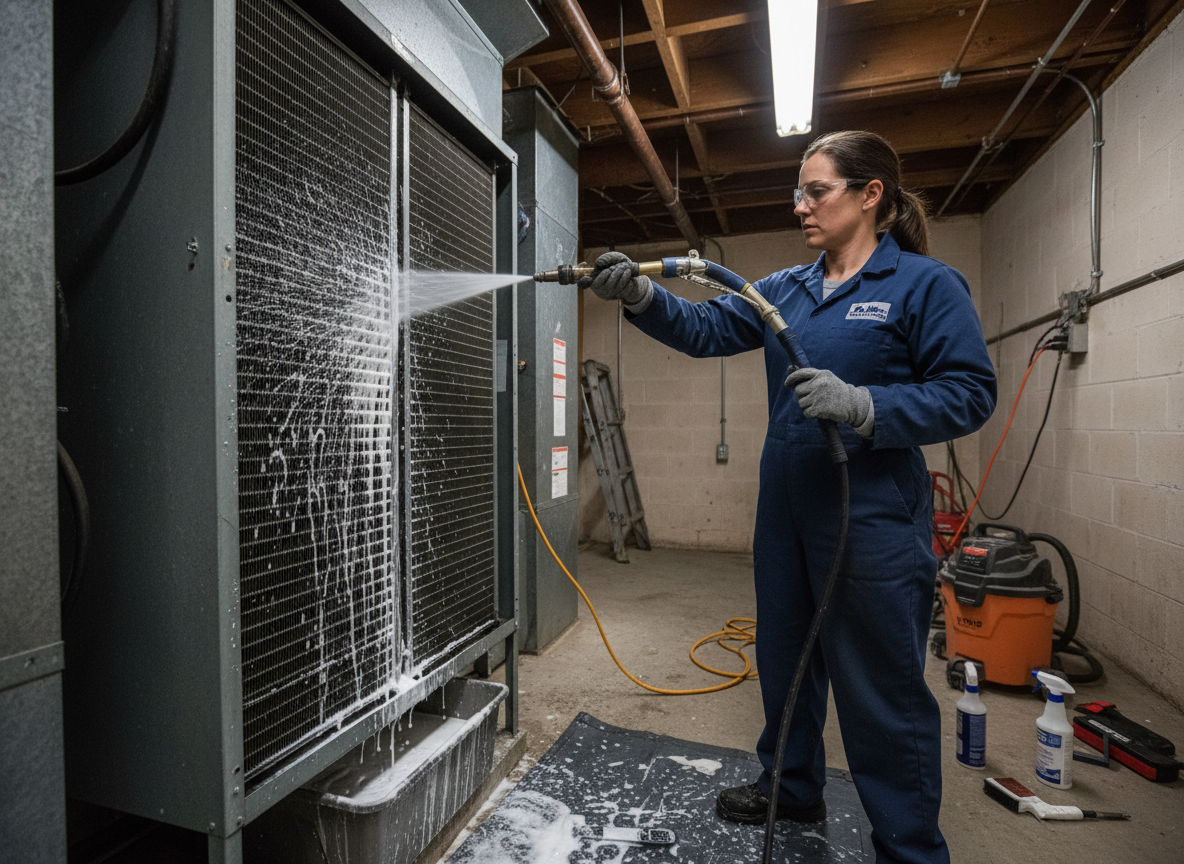
In Benbrook homes built from the 1970s onward, evaporator coils often collect thick layers of dust mixed with pollen from surrounding Tarrant County vegetation. This buildup forces the blower to work harder during long summer runs when temperatures push past ninety-five degrees. Technicians use non-acidic coil cleaners and soft brushes to reach fins without bending them, then rinse thoroughly to prevent residue that could corrode aluminum.
Condenser coils outside face additional challenges from lawn clippings, tree sap, and occasional flooding in low-lying yards near Benbrook Lake. Restricted airflow here raises head pressure and shortens compressor life. Cleaning requires isolating power, removing debris with a garden sprayer on low pressure, and straightening bent fins with a fin comb before reassembling panels.
Older duct-connected systems common in established Benbrook neighborhoods can hide mold growth on wet coils if the condensate drain clogs. Proper cleaning includes checking the drain line and pan for standing water, then applying an EPA-registered antimicrobial treatment only where visible growth exists. Homeowners notice immediate drops in humidity levels and lower electric bills once coils are restored.
Technicians always inspect the air filter housing and return grilles during visits because restricted intake air accelerates re-soiling. In homes with pets or recent construction, multiple cleanings spaced weeks apart may be needed to reach baseline performance. Cedar Sync schedules these jobs around the clock to avoid disrupting daytime cooling demands.
Technician insight
In Benbrook, the thing that catches most people out with coil cleaning hvac is how quickly pollen and dust from the surrounding open lots packs between the fins on older rooftop units. Homeowners often replace filters religiously yet still lose efficiency because the coils themselves never get touched. A single missed annual cleaning during the long cooling season can raise energy use noticeably by fall.
Reduced Cooling in Established Benbrook Home
A homeowner reported weak airflow and higher bills during peak summer. Inspection found heavy pollen and dust packed on the evaporator coil inside a 1980s system. Cleaning restored the temperature split and cleared the condensate line that had begun to back up. The unit now cycles normally without the previous strain.
How it works
- 1
System Inspection
Technician examines evaporator and condenser coils, checks for visible debris, measures temperature differential, and notes any drain issues.
- 2
Power Isolation and Protection
Power is shut off at the unit and breaker, then plastic sheeting protects flooring and nearby surfaces from cleaning solution.
- 3
Coil Cleaning
Coils receive appropriate cleaner, agitation with soft tools, and low-pressure rinse; fins are straightened afterward.
- 4
Final Checks and Reassembly
Drain line is cleared, antimicrobial applied if needed, panels reinstalled, and system is restarted to verify restored performance.
Pricing
Pricing varies by system size, coil condition, and access; upfront quotes provided before work begins.