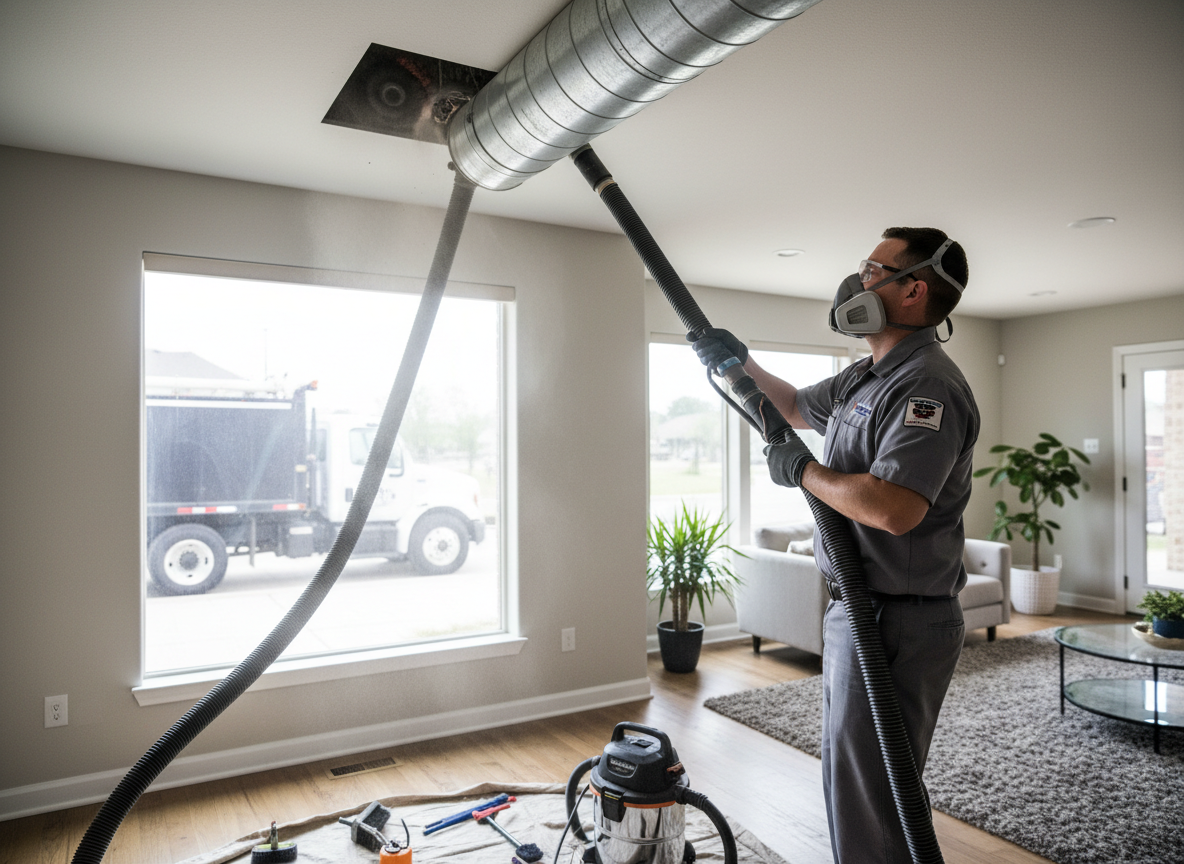
Benbrook homes built from the 1950s through the 1980s often have flex duct runs that collect thick layers of fine West Texas pollen and dust mites. These particles circulate every time the HVAC kicks on, especially during the long spring and fall allergy seasons. Proper cleaning reaches the main trunk lines and each branch run without disconnecting the entire system, cutting the load of airborne triggers that aggravate sinus and respiratory issues for residents along Benbrook Blvd and nearby streets in Tarrant County.
We start at the furnace or air handler and work outward, using negative-air machines to pull debris away from living spaces rather than pushing it into rooms. In single-story ranch homes common here, low attic access points and tight crawl spaces require careful equipment placement so insulation stays undisturbed. Homeowners notice fewer morning sneezing fits and less visible dust on furniture within days after the service, particularly when filters are changed at the same time.
Pet dander from local households with dogs and cats sticks to duct walls and re-enters the air stream during temperature swings common in North Texas. Cleaning the return plenum and supply registers addresses the main reservoirs without chemicals that could leave residue. The work is scheduled around the homeowner’s routine because the 24/7 operation at 8516 Benbrook Blvd allows evening or early-morning appointments when pollen counts are lower.
Technician insight
In Benbrook the thing that catches most people out with air duct cleaning for allergies is the amount of fine mesquite and ragweed pollen that packs into the flex duct joints after one windy spring. Older ranch homes along the boulevard have long horizontal runs that trap the stuff right above the bedrooms, so a quick register vacuum never reaches it. Skipping the main trunk clean means the allergens just get stirred again the next time the unit runs.
Persistent Spring Allergies on Benbrook Blvd
A couple in a 1970s single-story home reported nonstop sneezing despite new filters. Inspection showed thick gray pollen coating inside the flex runs feeding the master bedroom. We set up negative air at the air handler, agitated each branch, and extracted the buildup. Airflow improved and their morning symptoms dropped sharply within a week.
How it works
- 1
Initial Walk-Through
Inspect every accessible register, the air handler, and attic or crawl-space runs to map the duct layout in the specific Benbrook home.
- 2
Negative-Air Setup
Place the vacuum unit at the furnace and seal off sections so debris moves only toward the collection point.
- 3
Agitation and Extraction
Use rotating brushes and compressed air tools on each branch line while the vacuum pulls material out of the system.
- 4
Register and Return Clean
Remove and wash grilles, vacuum the return plenum, and reinstall after the main runs are clear.
- 5
Final Check
Run the system and confirm airflow feels even and no visible dust escapes from any outlet.
Pricing
Cost depends on number of runs, access difficulty in attics or crawl spaces, and whether the home has flex or rigid duct; call for an on-site assessment.