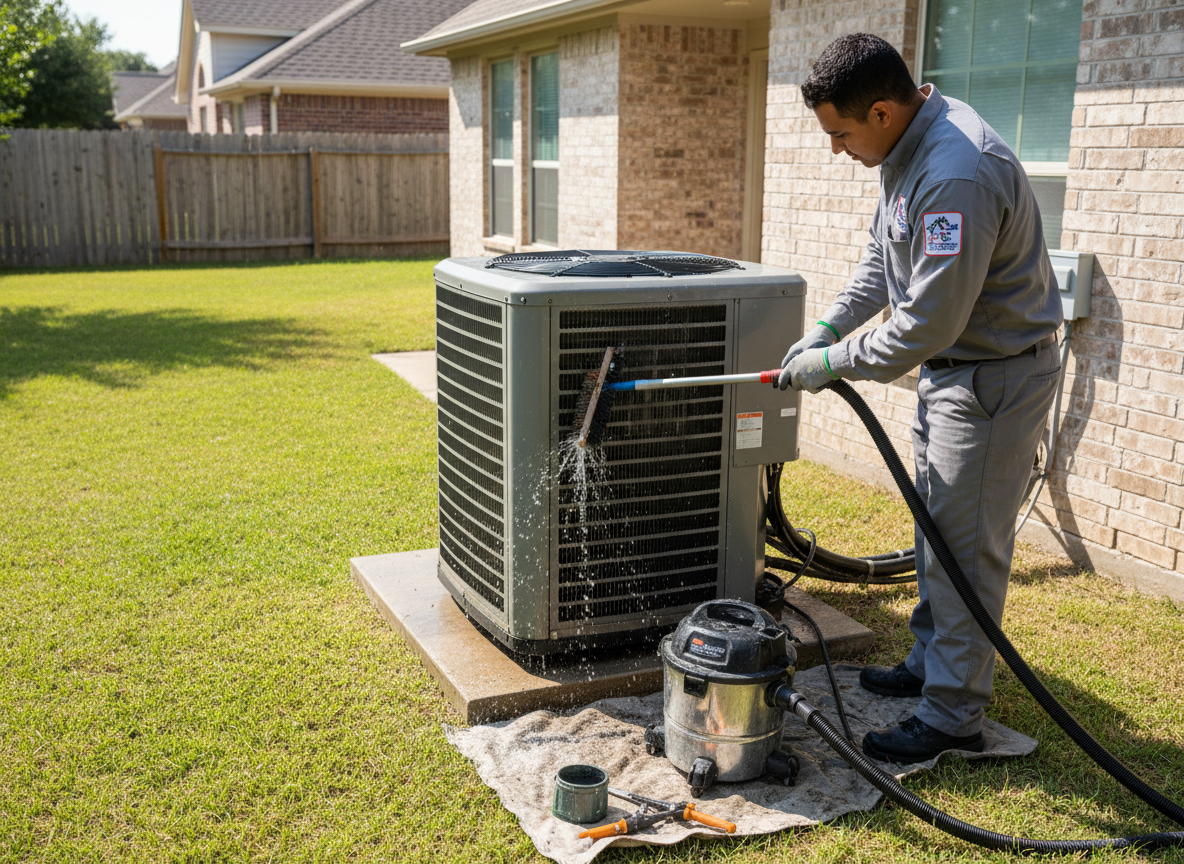
Benbrook homes built in the 1960s through 1980s often have rigid metal duct runs that sit in hot attics and collect fine West Texas dust carried on prevailing winds. When AC systems run nearly nonstop from May through October, that dust cakes along seams and turns into a breeding surface for mold once humidity spikes after thunderstorms. Proper cleaning requires accessing each trunk line and branch through existing registers and a main trunk opening rather than relying on vent-only brushes that miss the horizontal runs common in slab-on-grade houses here.
Tarrant County building practices from that era left many systems with minimal insulation and sharp 90-degree elbows that trap debris. A thorough AC cleaning service must use negative-air machines rated for the full system volume to keep loosened particles from re-entering living spaces. Homeowners in neighborhoods west of Benbrook Lake frequently report musty odors after heavy rain because condensate drains sit low and allow moisture back into the return plenum when filters are overdue.
Technicians also check for disconnected or crushed flex runs in crawl spaces that are common on the rolling terrain near Clear Fork. These hidden sections reduce airflow and create hot spots that force the AC to run longer, pushing more dust through the remaining clean sections. Cleaning only the visible vents without addressing these elbows leaves the system no cleaner than before and can worsen pressure imbalances in two-story homes.
Technician insight
In Benbrook, the thing that catches most people out with ac cleaning service is how 1970s slab homes near the lake have long horizontal returns sitting right above the soil line where moisture from occasional flooding keeps dust sticky and hard to pull without extra agitation time.
Musty Return in Westover Hills Adjacent Home
Homeowner noticed a persistent odor after spring rains. Mapping showed a collapsed flex return under the master closet that had collected standing water and mold. We replaced the damaged section, cleaned the main trunk, and restored airflow without cutting into finished ceilings.
How it works
- 1
System Mapping
Locate every supply and return run from the air handler through the attic and crawl space, noting elbows and disconnected sections typical in Benbrook construction.
- 2
Negative Air Setup
Place HEPA-filtered vacuum at the main trunk and seal registers to pull debris out without circulating it back into the home.
- 3
Agitation and Extraction
Run rotary brushes and compressed air whips through each line while the vacuum captures loosened material from metal ducts common in 1970s Benbrook houses.
- 4
Sanitizing and Drying
Apply EPA-registered coil and duct treatment only after confirming no standing moisture, then verify airflow at each register before leaving the site.
Pricing
Cost depends on number of runs, access difficulty in attics or crawl spaces, and whether flex sections need replacement; upfront quote given after mapping.